





Three levels
Workspace is the business: the name on the invoice, the staff, the clients, the money, the settings. Place is a location with a shape — a building with floors, a subdivision with streets, or a building run by someone else. Unit is a door: an apartment, a lot, a condo, a room. Units belong to exactly one place; places belong to exactly one workspace.
What lives at each level
| At the workspace | At the place | At the unit |
|---|---|---|
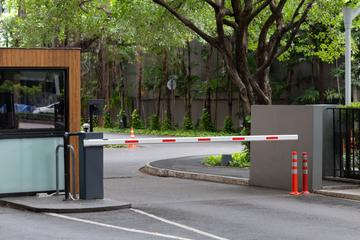
| Logo, payment details, invoice numbering, staff, clients, expense categories | Address and GPS point, shape, rota, gate, per-place payment details if different, occupancy card on My day | Name, floor or street, legal description, running costs, current and past tenancies, files |
Adding a place
Places › Add place. Name it the way people already refer to it. Choose the shape — stacked or flat, or "managed by someone else" for units in a building you do not run. Give it an address; the GPS point is set from the address and can be dragged. That is all the platform needs; units come next.
One place or several?
Two buildings on one street with one guard and one cleaning team are still two places, because "how full is Building B" is a question you will ask. A building and its annex with shared corridors may be one place with two groups of units. The test: does it have its own occupancy number and its own front door? If yes, it is a place.
Was this useful?
Thank you — that is what it was written for.
Describes the platform as it is today. Something out of date? Tell us. · help 0.71.0